





Fish farmers seek support to close production gap
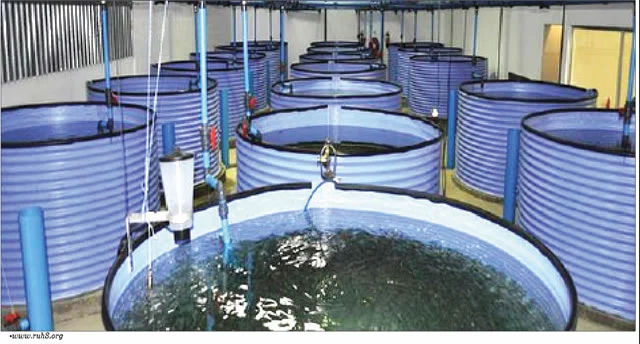
Nigeria’s domestic fish production is meeting less than a quarter of the country’s estimated requirement of 300,000 metric tonnes, the President of the National Fish Association of Nigeria, Ladan Aliyu, has said, calling for stronger government support and collaboration among fish farmers to bridge the supply gap.
Aliyu said fish farmers needed to organise themselves into sustainable cooperative societies, improve production capacity and work with the government to access essential inputs, training and supportive policies.
He spoke in Abuja on Wednesday during the inauguration activities of the association’s newly elected executive committee, where industry stakeholders raised concerns about inadequate domestic production, rising fish prices and the cost of importing frozen fish.
The association’s president said Nigeria’s current production remained far below the country’s needs, while imports supplied only part of the shortfall, leaving a significant gap to be addressed through increased local production.
“As fish farmers, we are currently producing less of the fish needed for consumption. Nigeria consumes about 300,000 metric tonnes of fish. Yes, that’s what we require. But for now, we are not producing even one quarter of it. And the importation brings in half of that quarter,” Aliyu said.
He said the situation underscored the need to strengthen domestic fish farming rather than rely heavily on imports to meet the country’s protein needs.
According to him, bringing fish farmers together under a sustainable cooperative structure would enable them to receive training, access production inputs and engage the government more effectively on policies that could expand output.
“Actually, we have to come together. What I’m just saying is that this is a formidable and sustainable cooperative society. When we do that, we train the farmers, we make sure that the government comes in as a partner, you know, to help with other input that we require and the policies that we need for the fish. That will help in improving the production,” he said.
Aliyu also defended fish as an affordable source of protein compared with other animal-based foods, although he acknowledged that the depreciation of the naira had increased the cost of imported varieties.
He said locally farmed fish could be cheaper than imported alternatives, but foreign exchange pressures had made imported products more expensive for Nigerian consumers.
“The issue is that because of this exchange… the value of our currency. So that’s why we’re having such issues,” he said.
He added that importers had to obtain foreign currency to purchase fish from overseas markets, with the resulting costs reflected in domestic prices.
The concerns were reinforced by the Deputy President of NFAN, Adewale Adewu.
He attributed the increase partly to global market conditions and the dependence on imported supplies, noting that government policies could help ease prices while encouraging local production.
“Titus is an imported kind of fish. And you see what is going on globally now. We discover that it’s not only Nigeria. Everything is skyrocketing around the world,” he said.
The Federal Ministry of Industry, Trade and Investment also urged the association’s new leadership to promote unity, transparency and accountability as it works to improve the fortunes of fish producers, processors, marketers and distributors.
Speaking on behalf of the Director of the Commodities and Export Department, Usman Bokani, Mrs Felicia Udeh congratulated the association on its July 29, 2026, election, describing the emergence of the new executive committee as an opportunity to strengthen the organisation.
She said NFAN played an important role in the commodities sector by representing stakeholders involved in fish production, processing, marketing, distribution, value addition and trade.
Udeh urged the executives to ensure that the interests of members remained central to their decisions and warned against internal divisions that could lead to disputes and litigation.
“I encourage you all to promote unity, transparency, accountability and inclusiveness, while ensuring that the interest of the wider membership remains central to your activities,” she said.
She added that the government was willing to work with the association through policies and other forms of support within its mandate, but stressed that the executives needed to operate collectively rather than allow the organisation to be controlled by a few individuals.
The association’s inauguration address also called for unity and professionalism among members, with the leadership urging stakeholders to embrace the principle of “one fish, one voice” to strengthen the industry, improve livelihoods and contribute to food security.
An Assistant Director in the ministry, Alhassan, also congratulated the newly elected executives and urged them to approach their responsibilities with commitment.
In his remarks, the association’s leadership said stronger collaboration among fish farmers, government agencies and other stakeholders would be necessary to expand production, create opportunities for members and support the sustainable development of Nigeria’s fisheries and aquaculture sector.
The production gap identified by NFAN places renewed focus on the need to improve access to inputs, technical training, financing and policies that encourage investment in fish farming. Closing that gap would require coordinated action across production, processing, storage and distribution, particularly as import costs continue to affect the prices paid by consumers.
All rights reserved. This material, and other digital content on this website, may not be reproduced, published, broadcast, rewritten or redistributed in whole or in part without prior express written permission from PUNCH.
Contact: [email protected]
Stay informed and ahead of the curve! Follow The Punch Newspaper on WhatsApp for real-time updates, breaking news, and exclusive content. Don’t miss a headline – join now!
Stay in the know—fast. Get instant alerts, breaking headlines, and exclusive stories with the Punch News App. Download now and never miss a beat.
Source: Punch Newspapers – Latest News